How to Build a Timeline from Fragmented Historical Records
A box of nineteenth-century letters with the envelopes lost. A parish register missing three pages. A photograph with no caption, showing a street that might be the same street in a second photograph taken twenty years later. This is what most historical mysteries actually look like on the desk: not a locked room, but a pile of paper that refuses to line up.
The timeline is where that pile either becomes a case or stays a pile. Building one is less about inspiration than about discipline — writing down what each document claims, what it can prove, and where it sits relative to everything else. The method below works whether you are chasing a family disappearance, a disputed land boundary, or an unsigned manuscript that may be a century older than its owner believes.
Start with a register, not a story
Before you draw a single line, build a table. One row per record, and columns for: what the document is, where it is held, its call number or shelf reference, the date it states, the date it can actually support, who created it, who it was created for, and your confidence in each of those answers. This feels bureaucratic for about an hour, then it saves you months.
The critical habit is separating three things that people instinctively blend together:
- Asserted date — what the document says about itself. A letter headed "14 March 1817".
- Supported date — the range the physical object and its content actually allow.
- Narrative date — where you are tempted to place it because it fits the story you are already telling.
The third column is the dangerous one. Write it down anyway, in a different colour, so you can see your own assumptions sitting in the record.
Bracketing: turning a vague date into a usable one
Most of your material will not have a clean date. A deed dated "the feast of St Martin next after the death of the said Henry" is not undated — it is dated by reference. Resolve the reference, and you get a day. Fail to resolve it, and you get a bracket, which is still useful.
Two terms are worth learning because they do real work. Terminus post quem — the limit after which. A document mentioning a bridge that was built in 1704 cannot have been written before the bridge existed. Terminus ante quem — the limit before which. A will proved on 3 June 1791 was written before that date, whatever date appears at the top.
Stack enough of these and gaps close on their own. A letter referencing a specific ship's departure at one end, and a reply acknowledging it at the other, brackets the whole exchange to a matter of weeks. Two such brackets in the same folder will often tell you which order the folder was assembled in, which is frequently the order in which events happened.
Practical prompts when a document resists dating:
- List every named person and check their dates of birth, marriage, death and known offices.
- List every place name and note the form used — spellings and administrative names change on a schedule of their own.
- List every event referred to, and find its date independently.
- Note the writing materials and format, then set them aside until the content has been mined.
- Ask what the document could not possibly know, and let that become your later limit.
When accounts conflict, keep both versions alive
The instinct is to choose. Resist it. A timeline that carries only the favoured version of a disputed event throws away the most informative thing in the file: the disagreement itself.
Give each account its own row and its own note explaining the interest of the person who made it. A widow's deposition, a land agent's report and a newspaper paragraph about the same eviction will not agree, and the reasons they do not agree are usually more revealing than the event. Record where they converge, and be precise about where they diverge — sometimes what looks like a factual contradiction is only a difference in what each witness was asked.
A timeline is not a claim about what happened. It is a claim about what the surviving evidence permits you to say, and in what order.
If two accounts cannot both be right, mark the earlier one as provisional rather than deleting it. When a new document arrives, you will want the discarded version back, and rebuilding it from memory is how errors enter a project permanently.
Anchoring the undated
Some items will say nothing at all about when they were made. Four anchors are worth trying, in roughly this order.
Content anchors
Names, offices, technologies, prices, addresses and administrative districts all date themselves. A form printed for an office that was renamed in a particular year sets a floor. A letter sent to a street that did not exist before a certain decade sets another.
Provenance anchors
Which bundle was it in? Whose hand wrote the label on the folder? A document filed inside a correspondence series spanning 1841 to 1843 is not thereby dated, but it is placed, and filing practice is often more consistent than the documents themselves.
Comparative anchors
Handwriting, ink colour, watermark, paper size, printing type, spelling habits. These give you ranges and probabilities, not verdicts. Use them to say "consistent with, but not proof of" and be content with that. A paper specialist may get you further, but most researchers need only enough to avoid absurd claims.
Silence as an anchor
Absence of a name from a well-kept series is weak evidence and should be labelled as such — records get lost, clerks get careless. But when a person appears in a tax list for eleven consecutive years and vanishes, the absence is a question worth putting on the timeline with a question mark beside it.
Assembling the line
Choose a scale that suits your question, and change it when the question changes. A single line covering two centuries will hide the week that matters; a week-by-week chart of the same material will bury the pattern. Build the coarse version first, print it, and mark the zone where the evidence thickens. Then build a second, finer timeline for that zone alone.
Colour-code by type of evidence rather than by certainty — records, testimony, inference, physical object — so that a glance shows you where the record thins out. Put every uncertainty in writing on the chart itself, not in a separate notebook. If you use software, keep one master file and export only for display; if you work on paper, use a long strip of lining paper and pencil, because the first version will be wrong.
Write the doubt into the line
A finished timeline should show its own weak points. Use consistent marks: a solid point for a documented date, an open circle for an inferred one, a bar for a bracket, a question mark for a placement that is merely convenient. Anyone reading it — including you in two years — should be able to tell at a glance which parts would collapse if a single document turned up.
Keep a short "why here" note for every entry that moved. Two lines is enough: which evidence placed it, and what would dislodge it. That log becomes the spine of anything you eventually write.
Before anyone else sees it
Run a final pass. Check that every entry traces back to a document you can name and a shelf you can find. Confirm that conflicting accounts are still present and still labelled. Look for entries that crept earlier or later to make a chain of events feel inevitable, and put them back where the evidence left them. Then ask a plain question of the whole chart: which single document, if it existed, would do the most damage to this arrangement? Write that down too. It is your next research errand, and the most honest sentence in the file.
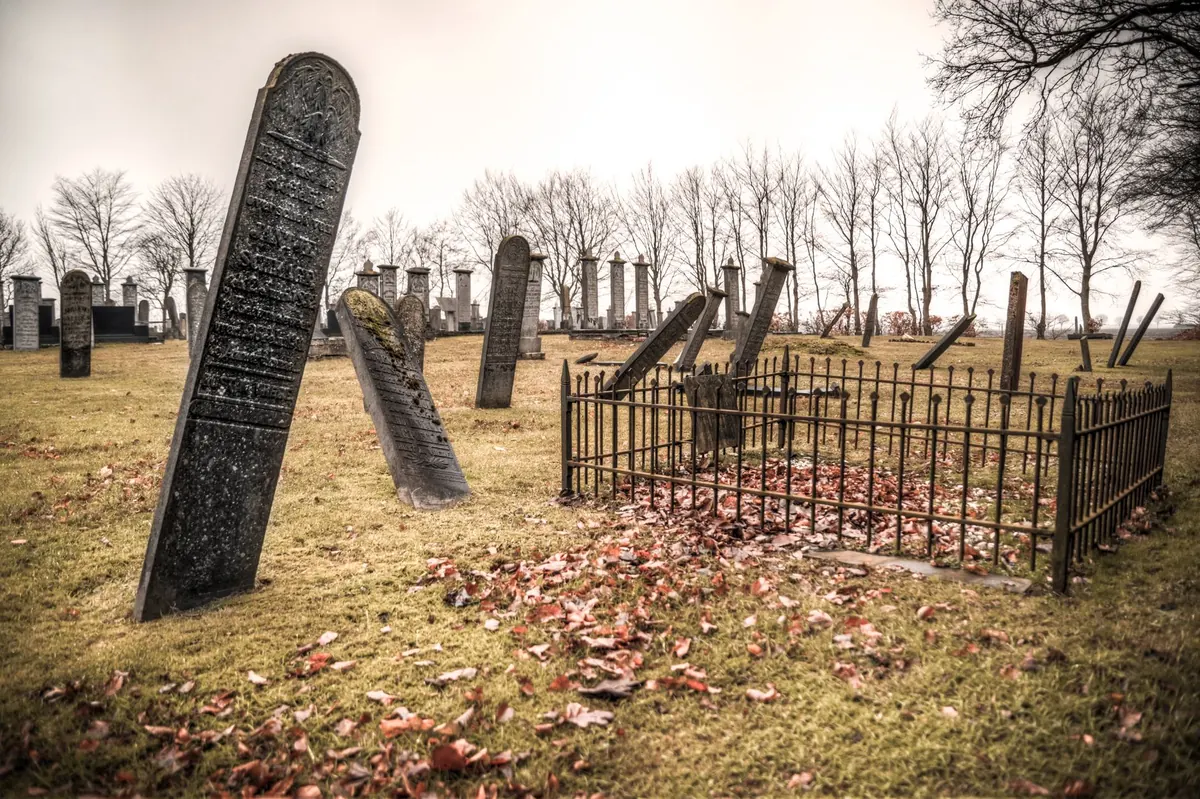
Photo: StartupStockPhotos / Pixabay